




Trump clears livestreamed firing squad for Fort Hood killer
President Trump approved the first U.S. military execution since 1961. Hasan faces a Dec. 3 firing squad at Fort Hood, and the Pentagon says the public will watch it live.
IJR · Oct 9, 2026 · 4 min read
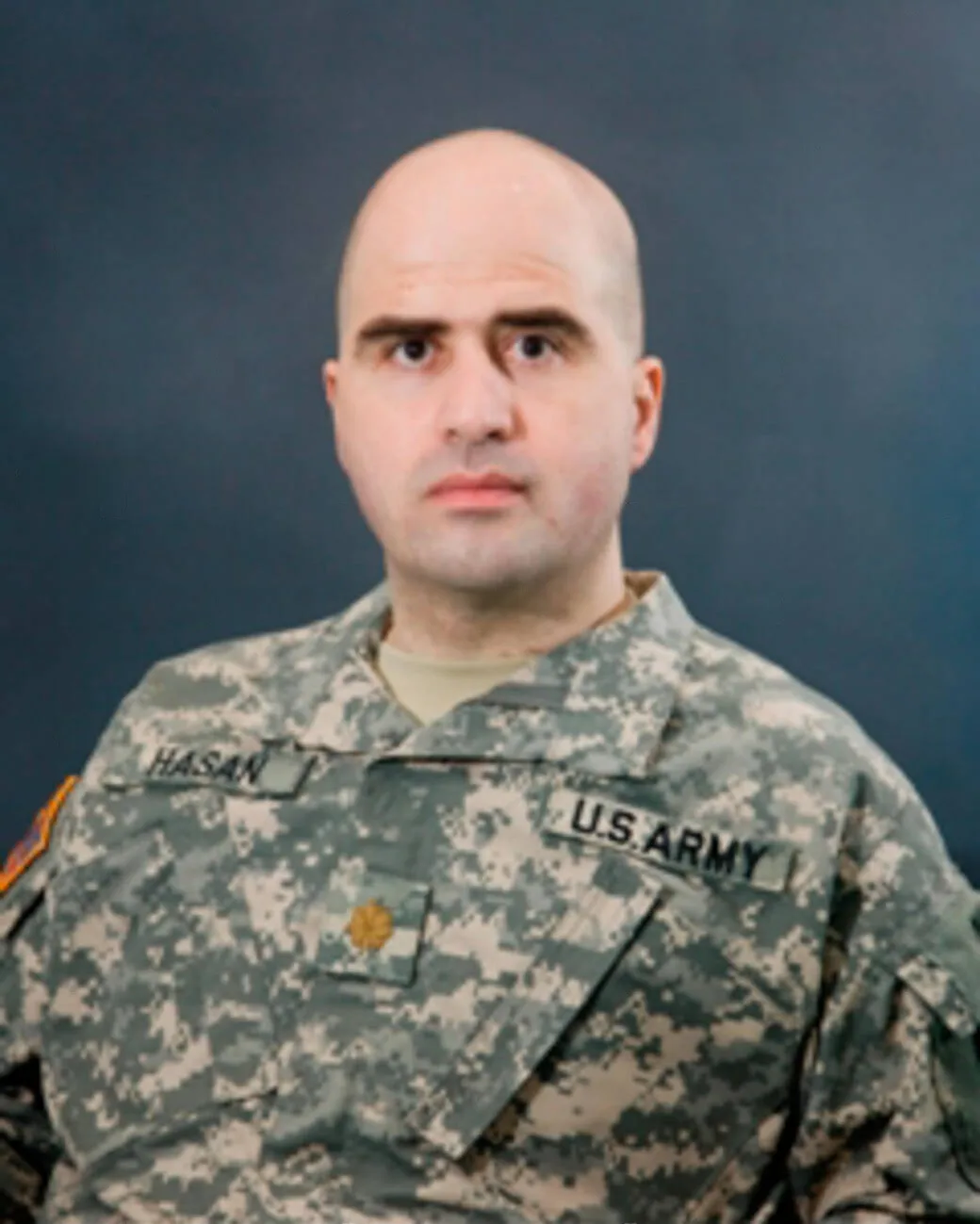
Defense Secretary Pete Hegseth, speaking aboard the USS Abraham Lincoln in an interview with Jack Posobiec of Real America’s Voice, said soldiers with rifles would carry out the sentence on Nidal Malik Hasan. “We’ll make sure that people are able to watch it, that it’s public,” Hegseth said. A Pentagon official later confirmed the plan in one line: “It will be livestreamed. Details will follow.”
The execution is scheduled for Dec. 3 at Fort Hood, Texas—the same day of the week, hour, and place as the 2009 attack.
On Nov. 5, 2009, Hasan, then an Army major and psychiatrist, opened fire in a medical facility where soldiers were waiting for checkups and vaccines ahead of deployment. He shouted “Allahu akbar” and used a laser-sighted handgun. Thirteen people were killed. Fox News has reported 32 wounded; other accounts have put the figure at 31 or more than 30. Twelve of the dead and most of the wounded were soldiers. The base was a staging point for troops headed overseas. Hasan himself was scheduled for deployment to Afghanistan weeks later. Police shot him during the arrest, leaving him partially paralyzed and confined to a wheelchair.
A military jury in 2013 convicted him on 45 counts of premeditated murder and attempted premeditated murder and sentenced him to death. Hasan conducted his own defense, called no witnesses, admitted he was the shooter, and apologized for “mistakes.” He described himself as a soldier who had “switched sides.” The court record noted his opposition to U.S. operations in Iraq and Afghanistan and his contact with Anwar al-Awlaki. He has been held at Fort Leavenworth as one of four inmates on military death row.
Under military law, a president must approve an execution by firing squad. President Donald Trump did so on Hegseth’s recommendation. Pentagon spokesperson Sean Parnell announced the approval with the line, “Judgment day for Hasan has finally come.” If carried out, it would be the first U.S. military execution since 1961, when John Bennett was hanged for rape and attempted murder, and the first by firing squad since 1945, when Eddie Slovik was executed for desertion.
Hegseth called the choice of method and setting a “no-brainer.” “It’s going to be soldiers with rifles executing the firing squad,” he said. He tied the decision to an older standard of resolve: “I kind of like the mentality we had in World War II, which was win, which was understand when the enemy attacks you, you need to stand your ground.” He described the 2009 shooting as a radical Islamist attack. Asked about any final requests from Hasan, Hegseth answered, “Don’t care. We’ll see him on December 3.” The public character of the sentence, he said, was deliberate so that people “need to understand that there are serious consequences for these types of things.”
The White House, asked whether Trump supported the livestream specifically, referred questions to the Pentagon. Livestream logistics and any delay from legal filings remain open. The Verge reported that it contacted major platforms about carrying the feed; none had responded by publication.
The decision arrives against a record of trouble with other methods. The Trump administration has expanded permissible forms of federal capital punishment to include firing squad, electrocution, and gas asphyxiation, in part because lethal-injection drugs have grown hard to obtain and the procedure has repeatedly failed. In Tennessee last week, attempts to execute Christa Pike by lethal injection were botched. Her lawyers said she awoke “angry and confused” in a hospital, still very sick and shackled to the bed. At least five states keep firing squads on the books; South Carolina carried one out in 2025, the first in the United States in 15 years. For the military, the firing squad is not a novelty borrowed from the states. It is a return to a method last used in wartime, carried out by soldiers, under a statute that already required the president’s signature.
Legal observers have raised process and policy objections in their own terms. Eugene R. Fidell warned that the case may not move on the administration’s timetable: “It frankly might outlast the current administration, and who knows if the next one will have the same penchant for executions.” That is an argument about duration and political continuity, not about the verdict. Deborah Denno, addressing the livestream itself, said it “could possibly be a good idea because it would be transparent.” The record does not show a broader Democratic or committee response to the Dec. 3 plan; no such statements are in the sourced material.